

Latest Products

Contact Us
- No.219, Zhangxin South Rd, Xiaolin Town, Cixi, Ningbo, Zhejiang, China
- sales@china-wj.com
- +86-574-63510582
Company Introduction
CIXI WANJIE ELECTRONIC CO., LTD was founded in 1992, we are a professional manufacturer that specializing in R&D, design, processing, production, sales and service of terminal blocks. The products include PCB screw and spring, pluggable, MCS, feed through and barrier terminal block, which are widely used in electric power control, automation control, elevator, instrumentation, communications, power supply, security, lighting, rail transportation and other related fields. The products are sold all over the world and have received the unanimous praise from customers.
WANJIE has passed ISO9001, ISO14001, OHSAS18001, the products are UL, CUL, VDE, CQC, CE, CB, ROHS, REACH approved. Besides, with the excellent management, R&D and QC team, advanced testing equipment and production device, comprehensive quality inspection system and UL witness laboratory, we try our best to ensure the quality could reach the relevant standard as well as meet the requirement of customers.
Excellent Product Quality
With the excellent management, R&D and QC team, advanced testing equipment and production device, comprehensive quality inspection system and UL witness laboratory, we try our best to ensure the quality could reach the relevant standard as well as meet the requirement of customers.
Rich Experience In Production
The products include PCB screw and spring, pluggable, MCS, feed through and barrier terminal block, which are widely used in electric power control, automation control, elevator, instrumentation, communications, power supply, security, lighting, rail transportation and other related fields.
After-sales Service
WANJIE not only develop standard product but also provide ODM/OEM service, in order to establish a long-term cooperative relationship with customers and provide them the best solution.
Global Shipping
Our products support global shipping and the logistics system is complete, so our customers are all over the world.
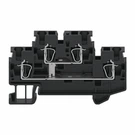
 Double Row Feed Through Terminal Block 2.5 Mm2
GUS2.5-202-PV. Use Group B C D. Rated Voltage [V] 300 300 600. Rated Current [A] 20 20 5. Wire Range 26-12
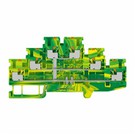
Add to Inquiry Triple Row Ground Terminal Connector 2.5 Mm2
GUV2.5-302-PE. Use Group B C D. Rated Voltage [V] /. Rated Current [A] /. Wire Range 26-12
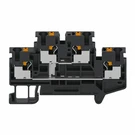
Add to Inquiry Feed Through Din Rail Terminal Block Connector 4.0 Mm2
GUV4-202-PV. Use Group B C D. Rated Voltage [V] 300 300 600. Rated Current [A] 28 28 5. Wire Range 24-10
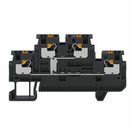
Add to Inquiry Feed Through Din Rail Terminal Block 2.5 Mm2
GUV2.5-202-PV. Use Group B C D. Rated Voltage [V] 300 300 600. Rated Current [A] 20 20 5. Wire Range 26-12
Add to Inquiry Feed Through Din Rail Connector 1.5 Mm2
GUV1.5-202-PV. Use Group B C D. Rated Voltage [V] 300 300 600. Rated Current [A] 15 15 5. Wire Range 26-14AWG
Add to Inquiry DG GUK Cover Plate
DG-GUKK3/5-202. Operating temperature [℃] -40~+105. Length/Height/Thickness [mm] 56.1/52.15/5.11. Insulation Material PA66. Imflammability UL94V-0
Add to Inquiry DP GUK Cover
DP-GUKK3/5-202. Operating temperature [℃] -40~+105. Length/Height/Thickness [mm] 56.1/25.2/2.5. Insulation Material PA66. Imflammability UL94V-0
Add to Inquiry End Cover Plate
D-GUDK4. Operating temperature [℃] -40~+105. Length/Height/Thickness [mm] 63.6/34.4/2.0. Insulation Material PA66. Imflammability UL94V-0
Add to Inquiry End Plate Cover
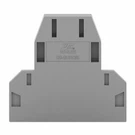
D-GUKK3/5. Operating temperature [℃] -40~+105. Length/Height/Thickness [mm] 56.1/52.2/2.5. Insulation Material PA66. Imflammability UL94V-0
Add to Inquiry SCREW Connector End Plate
D-GUK16. Operating temperature [℃] -40~+105. Length/Height/Thickness [mm] 42.5/42.45/1.5. Insulation Material PA66. Imflammability UL94V-0
Add to Inquiry GUK SCREW Connector End Cover
D-GUK3/10. Operating temperature [℃] -40~+105. Length/Height/Thickness [mm] 42.4/36.1/1.8. Insulation Material PA66. Imflammability UL94V-0
Add to Inquiry
What is Terminal Block
A terminal block (also called as connection terminal or terminal connector) is a modular block with an insulated frame that secures two or more wires together. It consists of a clamping component and a conducting strip.
Benefits of Terminal Block
Easy Maintenance
Terminal blocks are designed for easy maintenance and repair. They allow wires to be easily removed and replaced, without the need for soldering or other specialized tools.
Safe And Secure Connections
Terminal blocks provide a safe and secure way to connect wires. They are designed to prevent wires from coming loose or touching each other, which can cause electrical arcing and other hazards.
Versatility
Terminal blocks are available in a wide range of sizes and types, which makes them suitable for a variety of applications. They can also be easily customized to meet specific needs.
Cost-effectiveness
Over time, terminal blocks can be more cost-effective than traditional soldering or twisting methods, considering the time saved and reduced need for maintenance.
Plug-in Series Terminal Block
Plug-in series terminal blocks have two parts plugged and connected. One part presses the wire into place and then plugs into the other part. This part is soldered to the PCB board. This anti-vibration design ensures a long-term airtight connection and the reliability of the finished product. The sockets can add assembly lugs on both ends, primarily protecting the tabs and preventing poor alignment. The socket design also ensures that the socket will fit properly into the female body.
The sockets can also have assembly and locking fasteners. The assembly fasteners provide a more secure fixing to the PCB board. The locking snap position can lock the master and socket after installation. A variety of socket designs can match the different insertion methods of the masters. For example: horizontal, vertical, or inclined to the PCB, etc. Different methods can be selected according to customer requirements. Both metric and standard wire gauges are available.
It is suitable for the power supply equipment, automotive industry, LED lighting, computer room equipment, home appliances, security equipment, industrial control equipment, special appliances, etc.
European Series Of The Terminal Block
It is the most cost-effective form of existing wiring technology.
It is suitable for building electrical, industrial control equipment, solar photovoltaic, automotive industry, LED lighting, wind power generation, instrumentation, medical equipment, etc.
Fence-type Series Terminal Block
Fence-type series terminal blocks can achieve safe, reliable, and effective connections. Especially in the high current, high voltage use of the environment more widely.
It is suitable for electrical control and distribution systems, industrial automation systems, power electronics, ship distribution systems, highway and bridge lighting systems, security monitoring systems, medical equipment, etc. Such as surgical light dimmers, respirators, distribution control panels in ship cabins, load centers, and integrated control systems, and other equipment.
The Spring-type Terminal Block
The spring-type terminal block is a new terminal block using a spring device. Applicable to the world electrical and electronic engineering industry. Such as lighting, elevator lift control, instrumentation, power, chemical, and automotive power.
It is suitable for electronic equipment, industrial automation, robotic systems, energy and power systems, automotive electronics, LED lighting, billboards and other outdoor lighting, fire alarm, and security systems.
Rail-mounted Terminal Block
Rail-mounted terminal block adopts reliable threaded connection technology, electronic tolerance break technology, and the latest electrical connection technology.
It is widely used in power electronics, communication, electrical control, power supply, etc.
Orbital Series Terminal Block
Orbital series terminal blocks use crimping and unique thread self-locking design, making the wiring connection reliable and safe. The series of terminal blocks have a beautiful and generous appearance design and can be equipped with a variety of accessories. Such as short-circuit pieces, marking strips, baffle plates, etc.
It is suitable for railroad transportation, ships, industrial automation control, import and export trade, instrumentation and measurement, voltage conversion and transmission, oil and gas extraction, wind power and photovoltaic, etc.
H Type Through The Wall Type Terminal Block
H type through the wall type terminal block using screw connection line technology, the insulation material is PA66 (flame retardant grade: UL94, V-0), connectors using high-quality highly conductive metal materials.
H-type through-wall terminal blocks are available for side-by-side installation on panels of 1mm to 10mm thickness. The distance of the panel thickness can be adjustable automatically and form any number of poles of terminal blocks. And it is possible to use the isolation board to increase the air gap and creepage distance. Without any tools that can wear the wall-type terminal block firmly in the panel of the rectangular reserved hole, installation is extremely easy.
H type through the wall type terminal block is suitable for some need through the wall solution occasions. For example: power supply, consider an oscilloscope, electrical control cabinet, and other electronic equipment. Good insulation performance and high protection level. Users only need to work directly after the external wiring, eliminating many unnecessary wiring steps.
All-copper Terminal
All-copper terminals can avoid the battery effect of steel metal parts and copper wires in a humid environment. There is a connection hole in the middle of the terminal, and it can connect in the center or can connect with the side plug type connector. Can connect 4mm² wire voltage 800V current 41A electrical connection products.
It is suitable for high-temperature environments, aerospace, oil and gas production, power transformers, building electrical and lighting, battery assembly, traffic signal electronics, etc.
The wiring terminal utilizes the existing rail-type terminal block RTB connection technology. And the circuit composed of electronic components is added to realize the transmission coupling of the photoelectric process.
Application of Terminal Block

HVAC Systems
In HVAC systems, such as furnaces and air conditioners, panel mount terminal blocks facilitate connections to power sources, sensors, and controls. Their reliability and durability are crucial in the varying temperatures and conditions typical of HVAC applications.
Appliances
From kitchen appliances like ovens and microwaves to laundry equipment such as washers and dryers, such blocks provide the necessary electrical connections that ensure safe and efficient operation.
Commercial Food And Kitchen Equipment
In commercial kitchens and vending machines, these blocks manage multiple connections securely, handling high currents required by commercial-grade equipment.
Automotive And Marine Applications
In the automotive sector, particularly in recreational vehicles, farm equipment, and marine applications, they can withstand vibrations and harsh conditions, ensuring consistent performance and safety.
Industrial Applications
They are integral in material handling equipment, automatic door openers, and other motor control systems, where they contribute to the operational efficiency and safety of heavy machinery.
Military Applications
Given their robustness and reliability, panel mount terminal blocks are employed in military equipment, where they must meet stringent standards for performance under extreme conditions.

How to Maintain Terminal Block
Regular Inspections
Regularly inspect the terminal blocks for signs of wear and tear, corrosion, or loose connections.
Clean The Terminal Blocks
Regularly clean the terminal blocks using a soft brush and compressed air to remove any dirt, dust, or debris that may have accumulated on the contacts.
Tighten Connections
If you notice any loose connections, use a screwdriver to tighten the screws to the manufacturer's recommended torque value This will help to ensure a reliable and safe electrical connection.
Check For Overheating
Check the terminal blocks for signs of overheating, such as discoloration or deformation Overheating can be caused by various factors, including high currents or poor contact resistance, and should be addressed promptly to prevent further damage.
Use The Right Size Terminal Blocks
Always use the correct size and type of terminal block for the application. Using undersized terminal blocks can lead to overheating, poor contact resistance, and other issues.
Troubleshoot Faulty Connections
If you encounter a faulty connection, troubleshoot the issue by checking the wiring for shorts, breaks, or misalignment. Use a multimeter or other diagnostic tools to identify the root cause of the problem.
Follow The Manufacturer’s Guidelines
Always follow the terminal block manufacturer’s guidelines for installation, use, and maintenance of the terminal block to ensure safe and reliable operation.
Key Terminal Block Electrical Considerations
Current Rating
The current rating is often the most important parameter to consider in terminal block designs. The current rating is based on the conductivity of the terminals, cross-sectional area, and the corresponding heat rise. Operating at too high of a current can cause overheating and damage of the terminal block, leading to major safety concerns. It is best practice to use a terminal block that is rated for at least 150% of the max current that is expected in the system.
Voltage Rating
The voltage rating is in part determined by the dielectric strength and pitch of the terminal block housing. The maximum system voltage of the application must be less than the voltage rating. Any voltage surges in the system should also be evaluated when selecting the terminal block.
Pole Count
The number of individual circuits within the terminal block is also known as the pole count. This can be as few as a single pole, and as high as 24 poles and beyond, based on how many individual circuits are needed in the specific application.
Pitch
A terminal block’s pitch is defined as the center distance from one pole to the next. The pitch of the connector is often determined by the overall rating of the terminal block where factors like voltage/current, creepage, and clearance are considered. Common industry pitches would be, but are not limited to, 2.54 mm, 3.81 mm, 5.0 mm, and 7.62 mm.
Wire Size/type
The minimum and maximum wire size that the terminal block can accept would be a function of the voltage/current rating. In addition to making sure the wires used will physically fit into the terminal block, the type of wire should also be considered. Stranded or multi-core wire is typically used for screw terminals, and single-core is typically used for push-in style terminal blocks. In North America wire size is specified in units of American wire gauge (AWG). Wire size can also be specified as mm2.
How Terminal Block Works
Terminal blocks work by directing electrical current through an insulated body, allowing for multiple wires to work simultaneously side by side. Are terminal blocks safe? It may seem like having so much power running through one source may be dangerous, but terminal blocks are specifically designed to route electricity in a manageable pattern. They are made of non-conductive materials such as plastic to minimize risk, and come in a large range of shapes and sizes to meet different project needs.

How to Choose the Right Terminal Block
Determine specification requirements
Determine the electrical specifications needed according to your system. As already discussed, terminal blocks come in a variety of sizes, specifications and colors. You should choose a terminal block and DIN Rail that will fit well within the space you have and has enough clearance above and below for the terminals, accessories and the bend radius of the wires being connected. Always make sure you have met the proper agency approvals for safety and end user location. Electrically you must consider the maximum voltage, current rating and the wire sizes used in your system. The wire size can be calculated through the current rating, and It also depends upon the type of conductor being used: whether it is solid or stranded. The contact material of your terminal block and wires of dis-similar metals can corrode and aluminum on copper will loosen if not properly treated. If it were a signal reading like a thermocouple the metal has to match the same metal type as the wire, otherwise the measurement is no good. Review of the physical environment as well as the temperature ratings will also need to be done. Then lastly consider that a technician may have to get to these after install, so the actuation points to remove and re-attach wires should be easily accessible and easy to see.
Choose compatible accessories
After you have chosen a suitable terminal block housing, select jumpers, end covers and end brackets that match your Din rail requirements. Make sure your jumpers are also rated for the full current your conductor needs to carry, often they do not. In some cases, terminal blocks can contain fuses or circuit breakers for circuit protection, indicator lights for easy monitoring, as well as diodes, resistors, capacitors or other electronics for enhanced safety.
Determine rail length
To calculate rail length, first, calculate the total density per foot of all types of blocks and their quantity. Now, add the width of end covers and end brackets too. Also add the width of separators; if there are any. Since we also need to accommodate tolerance, add 0.0008” per terminal. And don’t forget to add at least 0.5” to your calculations for each rail in order to accommodate rail mounting screws.
Our Factory
CIXI WANJIE ELECTRONIC CO., LTD was founded in 1992, we are a professional manufacturer that specializing in R&D, design, processing, production, sales and service of terminal blocks. The products include PCB screw and spring, pluggable, MCS, feed through and barrier terminal block, which are widely used in electric power control, automation control, elevator, instrumentation, communications, power supply, security, lighting, rail transportation and other related fields.

FAQ
We're professional terminal block manufacturers in China for 30 years, specialized in providing high quality products and service. We warmly welcome you to buy bulk high-grade terminal block for sale here from our factory.
